
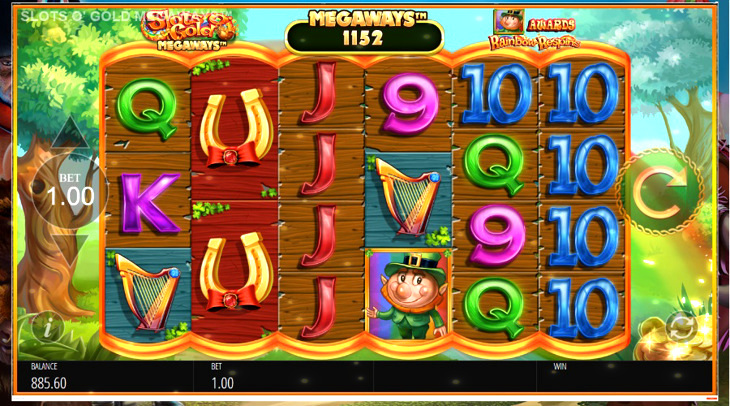
If you play online slots, you already know security matters. It’s especially critical for games where real money moves. slot bandit megaways, a favorite among Canadian players, comes with strong security built in. Two-Factor Authentication (2FA) stands at the heart of it. This article details how 2FA works and why it matters for this particular slot game. We’ll look at it not as a game feature, but as crucial armor for your account. The goal is straightforward: to keep your money and your gameplay safe from anyone who doesn’t have access.
Understanding Two-Factor Authentication (2FA)
Two-Factor Authentication is a verification step that demands two distinct proofs of who you are before allowing entry to an account. For Bandit Megaways Slot, providing your password isn’t enough. You require a second, distinct key. This commonly comes from one of three categories: something you remember (like a secret PIN), something you own (your phone generating a code), or something you are (your fingerprint). Most online casinos use the “something you have” method. This extra layer converts a simple lock into a much more robust barrier. Even if someone acquires your password, they can’t get in without that second piece. Your deposit balance and play history remain protected.
The logic here is powerful in its simplicity. Imagine a thief gets your username and password through a phishing email or a data leak. They still hit a wall. Without your actual phone or authenticator app in hand, they’re stuck. This halts most account theft before it starts. For someone playing the slots on Bandit Megaways Slot, that means less worry. You get to concentrate on the game’s cascading wins and climbing multipliers, not on whether your account is under siege. That extra gate enables you to settle into the fun.
Why 2FA is Vital for Online Slot Players
Online slots like Bandit Megaways Slot function in a online realm, and that makes player accounts a target. These accounts store cash deposits, personal details, and a record of every transaction. A password alone is a weak protection. People pick weak passwords. They repeat them. Passwords get stolen. Adding 2FA puts up a obstacle. I don’t see it as optional anymore. A hacked account can mean more than lost funds; it can result in identity theft and misuse of your personal information. For players in Canada, using 2FA follows the top advice from cybersecurity experts across the country.
There’s another angle, too. When a platform supports 2FA, it delivers a clear message. It shows the people running Bandit Megaways Slot are concerned about protecting their players. They invest in tools to protect your money and privacy. That builds trust, which is everything in online gaming. I’m far more likely to play seriously on a site that takes security this seriously. It’s a pragmatic concern with a game capable of big payouts. Securing the door to those winnings is equally important the mechanics that create them.
Specific Risks 2FA Reduces
Enabling Two-Factor Authentication directly counters a few major threats. Credential stuffing attacks are the first. Here, hackers use bots to try stolen login pairs on thousands of sites. With 2FA on, those bots fail at the second step. Phishing scams also are neutralized. A fake login page might deceive you into giving up your password, but the scammer likely can’t produce the live, changing code from your phone. Man-in-the-middle attacks, which snoop on data you send, are also defeated. Any intercepted 2FA code runs out in 30 seconds, making it worthless for a later login.
The Financial and Personal Data Imperative
At its core, 2FA protects two assets: your money and your identity. Your gaming account is a financial tool. A breach could let someone drain your balance or use a saved payment method. On the personal side, your account profile contains data useful for scams or for selling on shady online markets. By demanding a second factor, you’re doing more than guarding your next spin. You’re putting a strong lock on your entire digital presence with that casino. It’s a fundamental, necessary habit for anyone who engages online.
How to Enable 2FA for Your Bandit Megaways Account
Turning on Two-Factor Authentication for your Bandit Megaways Slot account is usually simple. The process happens on the casino site that features the game. While each operator’s website is a bit different, the steps are essentially the same. Start by logging into your main casino account with your usual details. Head to the account settings or security area. Look for a profile icon or a gear symbol. Inside that menu, look for a setting named “Two-Factor Authentication,” “2FA,” “Security,” or “Login Verification.” Choosing that begins the setup.
The site will then take you through linking an authenticator app. Google Authenticator, Authy, and Microsoft Authenticator are all standard choices. You’ll usually scan a QR code on the screen with your phone’s camera, using the app. This links the app with your account. The app then generates a six-digit code that refreshes every 30 seconds. The website will prompt you to type in the current code to confirm everything works. After that, any future login attempt from a new device or browser will need both your password and the fresh code from your app.
- Sign into your casino account hosting Bandit Megaways Slot.
- Head to Account Settings, then find the Security section.
- Select the option to enable Two-Factor Authentication.
- Choose “Authenticator App” as your 2FA method.
- Utilize your authenticator app (like Google Authenticator) to scan the QR code shown.
- Type the 6-digit verification code from the app into the website.
- Confirm the activation. Store any backup codes you’re given in a safe place.
Best Practices for Administering Your 2FA Setup
Switching 2FA on is just the beginning. Good oversight prevents lockouts of your own account. Your key responsibility is to keep the backup codes safe. You receive these codes during setup, and each one is valid once. They are your emergency escape hatch if your phone dies. Save them in a trusted password manager. You could also print them and stash the paper somewhere secure. Never store them in a plain text file on your desktop or in an email. Consider those backup codes like a spare key to your house.
Keep your account recovery email and phone number updated, and protect them with strong passwords too. This information is your last-resort path back in when all else fails. Also, think twice before you click “trust this device.” It’s handy for your own laptop or phone, but avoid it on public computers. Make it a routine to check your account’s active sessions and trusted devices list in the security settings. This lets you spot and boot out any unfamiliar logins with a single click.
Fixing Common 2FA Problems
At times, even with ideal setup, Two-Factor Authentication may stutter. The usual culprit is a a time sync issue. Authenticator apps are dependent on perfectly synced clocks. If your phone’s time wanders by only a little, the codes it creates won’t correspond to the server’s standards. The majority of apps offer a option to sync time by itself over the internet. Enable that. If codes keep not working, attempt yourself modifying your device’s clock options or reinstalling the app. Just make sure you have those backup codes available before you mess with anything.
Losing access to your authenticator device creates a more significant challenge. This marks the moment your backup codes prove their worth. Employ one code to log into your account. From there, you can deactivate the old 2FA and set it up again with your new phone. If you lose both your phone and the backup codes, your single choice involves customer support. Prepare for a thorough identity verification. They’ll request multiple pieces of evidence that you truly are the account owner. This whole problem demonstrates why those preparation steps are important. A bit of effort at the start stops a major lockout in the future.
The Next Phase of Account Security in Online Gaming
Account security is always evolving, and online gaming sites regularly experiment with new protections before others. Authenticator app 2FA is the solid benchmark today, but the following phase is upon us. Biometric logins, using your fingerprint or face, are combining high security with convenience. These methods often work within a 2FA framework, delivering a fast and secure check each time you log in to play Bandit Megaways Slot.
Then comes the move toward killing passwords entirely. Passwordless authentication could employ a physical security key you plug in, or a passkey stored on your device or browser. It eliminates the risks that come with remembering and recycling passwords. For players, the future appears as stronger protection that minimizes friction. The excitement of the game remains front and center. As these tools develop, top platforms will adopt them, elevating the security standard to new levels and wrapping player accounts in smarter defenses.
Striking a Balance Between Security with a Smooth Gaming Experience
A few players fear that more robust security will hinder the fun, introducing annoying steps between them and the slot reels. But current 2FA, particularly with authenticator apps, is designed for speed. Grabbing a code becomes a two-second reflex. Employing the “trust this device” feature prudently on your own computer means you won’t see the prompt every single time. Trading those few seconds for unbreakable security is a fair deal. It ensures your gaming session entertaining, not plagued by worry about your account’s safety.
The trick is for casinos to implement 2FA with a gentle touch. Mandating the second factor for critical moves like making withdrawals or changing your address is logical. Allowing trusted devices sign in for everyday play finds a clever middle ground. I favor this approach. It means I can dive deep in Bandit Megaways Slot—tracking the multiplier climb, hoping for the next cascade—without persistent security pop-ups. But I still know my account’s core is locked down tight. That balance is the hallmark of a security system crafted for real people who just want to play.
